The Future of AI-Powered Customer Engagement: Transforming Websites by 2026
Introduction
As we look towards 2026, it’s clear that AI-powered customer engagement is evolving at a rapid pace. Gone are the days of simple chatbots; we are now entering an era of adaptive, predictive, and almost “invisible” experiences that could reshape not just how websites operate but how they sell. This transformation provides extraordinary use cases beyond today’s familiar personalization widgets and FAQ bots. Let’s dive into some surprising ways AI will revolutionize user experience on websites.
From Chatbot to On-Page Co‑Pilot That Rewrites the Interface in Real Time
Imagine a website that acts as a co-pilot, one that can edit its layout and flows in real time, tailoring itself to each user’s unique journey. This evolution marks a shift from chatbots merely answering questions to being integral parts of the user interface.
In this future scenario, the website will dynamically reorder content based on user intent, perhaps showcasing pricing first for those demonstrating high intent to buy. Tailored micro-flows will guide users through the process, adapting to their needs as they navigate the site. This means, instead of getting lost in a sea of information, users will feel as if the site understands them, leading to fewer clicks and more conversions as AI shortens their path to action.
By implementing such self-optimizing funnels driven by machine learning, marketers are set to see remarkable improvements in their engagement metrics. With AI acting almost intuitively, the website feels as if it reads the user's mind, turning confusion into clarity.
Generative UI: Websites That Design Themselves per Visitor
The concept of Generative UI leverages AI to craft a completely custom interface tailored to each visitor based on their goals, context, and history. Envision a website that evolves as a living organism, adjusting its structure in response to various factors, such as the time of day or previous interactions.
In this world, the layout and features of a webpage will adapt uniquely for each user. Perhaps a user coming back for a second visit will see a more streamlined checkout process, while first-time visitors are guided through introductory content. Prototypes of these adaptive interfaces are already in development, predicting user tasks and modifying the layout to enhance usability.
As these generative designs come to fruition, websites will shift from generic pathways to goal-focused canvases, significantly enhancing task completion and minimizing bounce rates. The alignment between user intent and interface design will lead to higher engagement, faster decision-making, and ultimately, stronger conversion rates.
Zero UI Engagement: Voice, Gestures, and “Invisible” Help on the Web
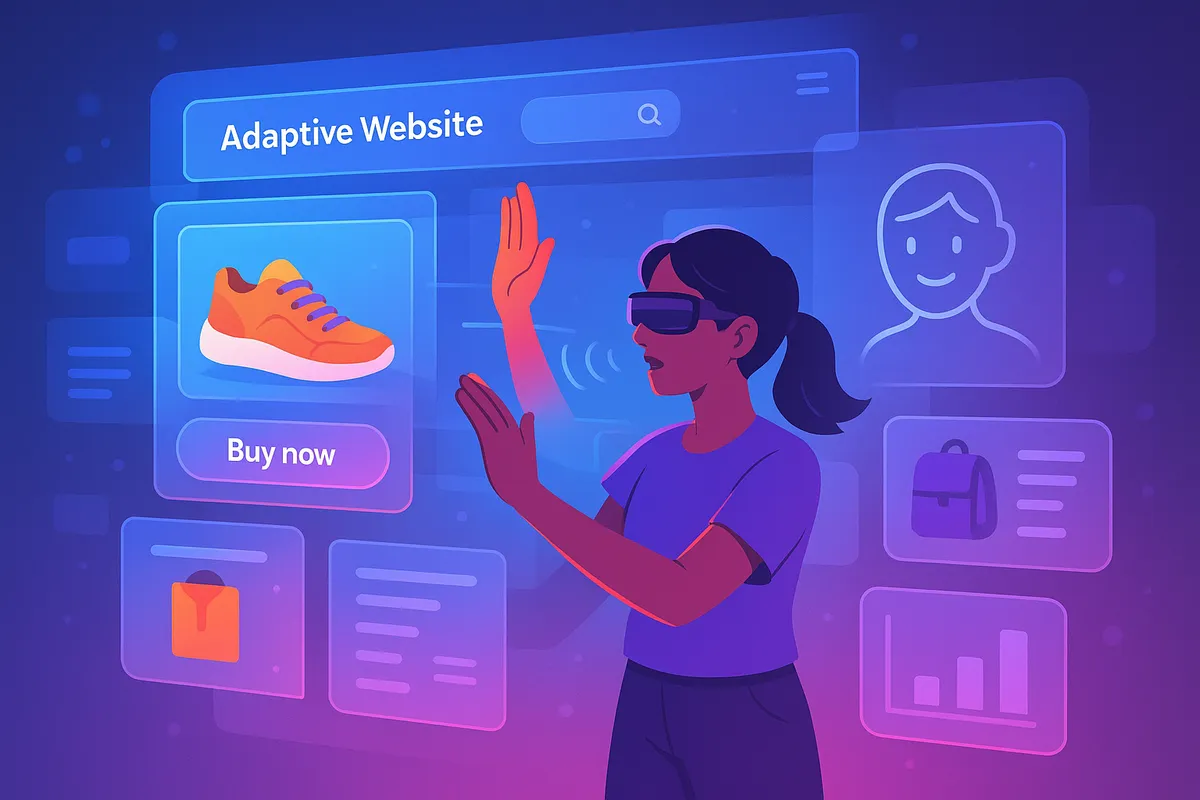
The principles of Zero UI suggest that by 2026, we can expect voice interactions, gestures, and anticipatory actions to merge into the web experience, creating an almost invisible layer of support. Here, interfaces will become less about clicks and more about ambient interactions.
Imagine initiating a voice command such as, "Explain this plan in simple terms,” and the website responding with an audible breakdown tailored just for you. Furthermore, future web experiences may utilize gesture or eye-tracking tech to streamline product exploration, enabled by advances in augmented and virtual reality.
With AI more heavily integrated into devices, these services will become faster and more private, allowing for seamless multimodal interactions. The result? Users will navigate without noise or clutter, receiving help when they need it most, without the need to sift through overwhelming menus.
Conclusion
As we approach 2026, the landscape of customer engagement driven by AI is on the brink of a significant transformation. The future will see websites employing adaptive interfaces that guide users intelligently, generative designs tailored to individual needs, and immersive Zero UI interactions that provide assistance seamlessly.
For businesses looking to capitalize on these trends, harnessing AI-driven tools like Untap could be the key to staying ahead. Whether by improving customer services, increasing conversions, or automating website engagement, embracing these innovations will empower you to deliver exceptional experiences for every visitor. Don't wait for the future; start reshaping your website today!