Revolutionizing Customer Engagement: The Impact of AI-Driven Predictive Analytics
Introduction
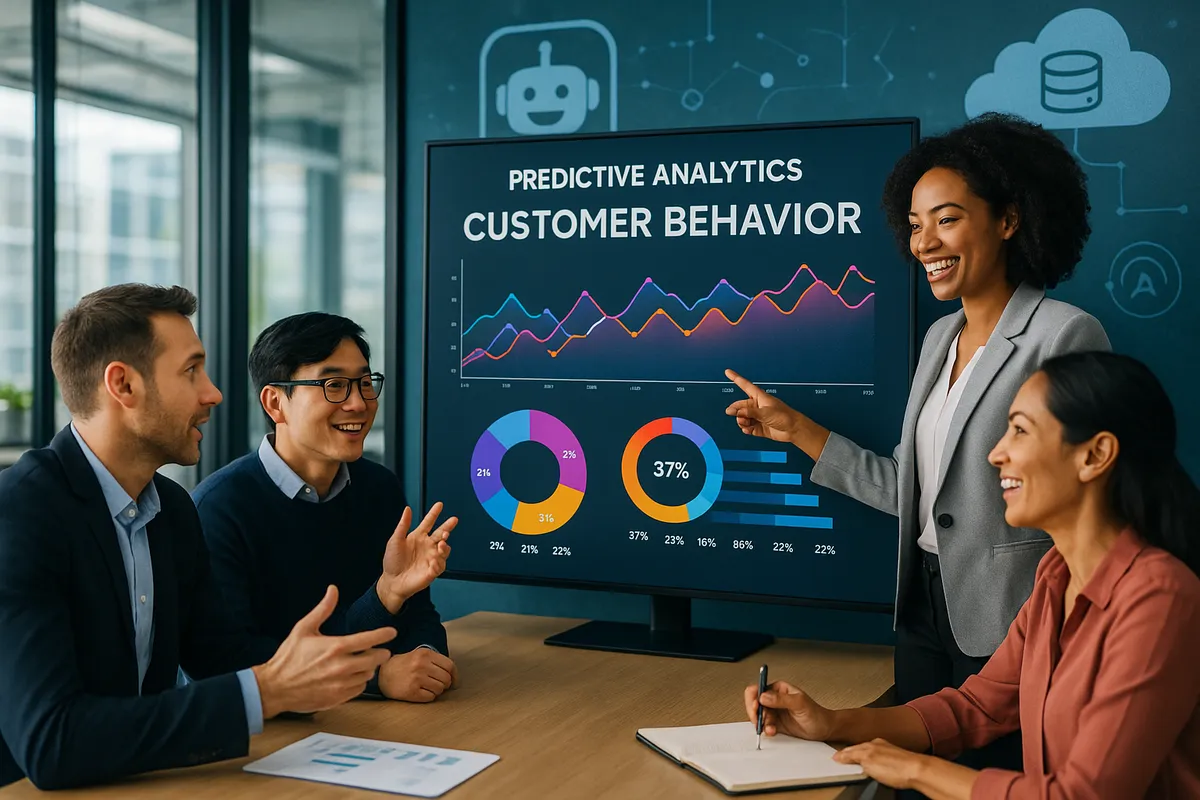
In the fast-paced world of business, understanding customer behavior is crucial. Enter AI-driven predictive analytics — a game changer in customer engagement that allows companies to anticipate needs, personalize interactions, and ultimately, boost their bottom line. By leveraging this technology, businesses can forecast behaviors such as churn or purchases, which leads to improved retention rates and conversion metrics across various sectors, including B2B marketing, retail, and payment industries.
Harnessing the Power of Predictive Analytics
The shift towards predictive analytics is revolutionizing customer engagement strategies. Companies using AI-driven personalization report significantly higher engagement rates — in fact, as many as 87% claim improved interactions after implementing such technologies. The projections are equally impressive, with estimates suggesting that 95% of customer interactions will be AI-powered by 2025. This trend isn't merely a passing fad; it emphasizes the pressing need for businesses to adopt advanced segmentation techniques and real-time personalization.
To successfully harness these powerful insights, businesses must focus on several key implementation strategies, including breaking down data silos, deploying effective predictive models, and integrating automation to facilitate next-best-action triggers. This approach not only speeds up campaign execution by up to 50% but also enhances the customer experience through significant personalization.
Building the Infrastructure for AI Success
Deploying AI predictive analytics requires robust infrastructural changes. Companies must create unified data architectures that enable real-time processing of behavioral signals and customer data. This starts with the establishment of cloud data lakes that consolidate information from various silos. By employing ETL (Extract, Transform, Load) pipelines, businesses can achieve a comprehensive and clean view of customer data across all channels, whether it be sales, marketing, or service.
Additionally, predictive models must be integrated to assess customers' propensity to buy or the risk of churn. Automation can then be employed to ensure that the most relevant messages reach customers at the right time, significantly reducing manual efforts while delivering a more personalized experience. Human oversight remains essential throughout this process to maintain authenticity and prevent over-automation that can feel robotic.
Real-World Impact: Case Studies
Looking at real-world applications illustrates the tangible benefits businesses can reap from predictive analytics. For instance, platforms like MoEngage and Insider have reported an increase in campaign frequency, leading to enhanced click-through and conversion rates. These companies are not alone; others, such as HasData and Customer.io, have successfully reduced churn by implementing early warning systems that flag at-risk accounts for timely interventions.
Moreover, companies like Netcore Cloud leverage affinity scoring to focus on high-propensity segments, ultimately cutting campaign volume while simultaneously boosting conversion rates. Such strategies underscore the vital role of AI chatbots in facilitating inquiries and conversions; these solutions automate messaging based on behavioral triggers, enhancing onboarding processes and overall customer retention.
Future Trends Shaping Engagement Strategies
Looking ahead, the future of predictive analytics and customer engagement looks promising. By 2026, predictive customer experiences (CX) are projected to dominate, shifting the paradigm from reactive to proactive engagement. This change will be driven by improved feedback loops that connect data, insights, and meaningful actions. Research points to a market growth of over $47 billion by 2030, with 95% of all customer interactions becoming AI-driven.
Businesses must also prepare for deeper integration of generative AI, which will empower customer-centric experiences. As consumers increasingly demand consistent brand interactions, companies will need to remain adaptable. This adaptability hinges on artificial intelligence's ability to analyze performance data and tailor real-time experiences accordingly.
Practical Applications of AI Chatbots
AI chatbots are pivotal in enhancing business engagement. Organizations leveraging this technology report astounding increases in conversion rates — some cases showing boosts of 20-30% through predictive modeling. More than 60% of customer inquiries can be resolved through automated, personalized responses, allowing human agents to focus on more complex tasks. The benefits of this technology extend to problem resolution in real time, onboarding personalization, and predictive targeting — all contributing to better retention rates and overall customer satisfaction.
Conclusion
Artificial intelligence, particularly through predictive analytics, is more than just a tool; it's a pivotal strategy that reshapes how businesses engage with customers. By investing in AI, organizations can foster deeper relationships with their clientele, improve retention and conversion rates, and drive meaningful growth. As the landscape continues to evolve, solutions like Untap can empower businesses to harness the full potential of AI-driven customer engagement, transforming inquiries into conversions while maintaining a personalized touch.